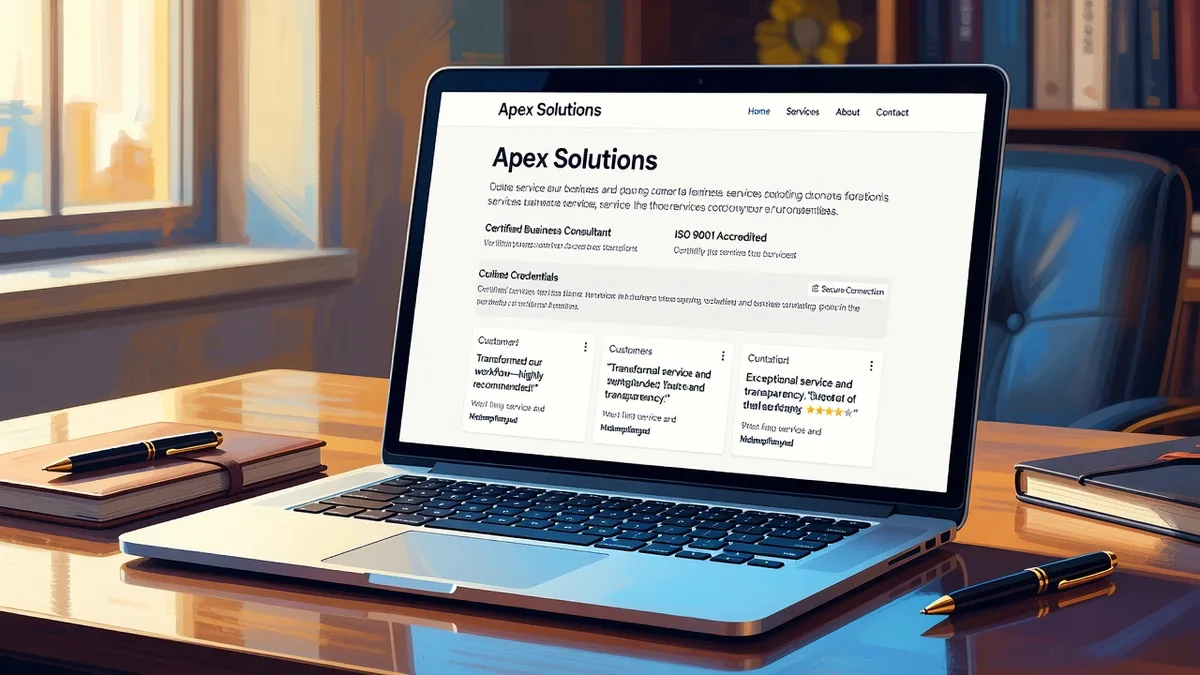
<p>Google shipped Chrome’s auto-browse agent this month. Unlike Apple’s Siri, which only reads your site through summarisation, Google’s agent actually visits your website, interacts with forms, clicks buttons, and takes actions on your behalf. This is not theoretical anymore. It is happening now.</p>
<p>The question every North London business owner should ask: what are the authoritative voices in search and AI saying about this shift, and what do you need to do about it?</p>
<h2>What the Research Actually Shows About AI Agent Browsing</h2>
<p>Industry researchers have been quietly documenting what autonomous agents mean for websites. The consensus from established sources is clear: agents need structured, accessible, trustworthy content to act effectively.</p>
<p>Search Engine Journal, a publication that has tracked Google’s algorithm changes for over a decade, reports that Chrome’s auto-browse system visits your site to perform specific actions. This is fundamentally different from traditional crawling. The agent is not just indexing; it is interacting. It fills out contact forms, checks availability, processes information, and makes decisions based on what it finds.</p>
<p>What this demands: your website must be transparent about what you do, where you are, how to contact you, and what you offer. If your site is unclear, confusing, or buried under layers of JavaScript that obscure meaning, agents struggle. They cannot interpret your value proposition the way a human can infer it from design cues or marketing messaging.</p>
<h2>The Entity-First Approach: Shifting From Keywords to Knowledge</h2>
<p>GraphRAG research, documented by Search Engine Land, reveals why AI systems are moving away from isolated text snippets toward connected knowledge graphs. GraphRAG stands for “Graph Retrieval-Augmented Generation.” In plain terms: AI no longer searches for keywords; it searches for entities and their relationships.</p>
<p>An entity is something concrete: your business, your location, your service, your customer base. When AI browses your site, it is mapping these entities and the connections between them. It asks: who is this business? Where do they operate? What do they actually do? Who do they serve? What problem do they solve?</p>
<p>This matters because it means traditional keyword-stuffing SEO is now even less useful. Your website needs to communicate clearly and specifically who you are, not just what words rank. For a web design agency in Finchley, this means your site should make it obvious that you design websites for North London small businesses, not hide behind vague claims like “digital solutions.”</p>
<p>Authoritative sources in the field are already advising businesses to shift from keyword optimisation toward entity clarity. Your business name, location, service category, and contact information should be immediately obvious to both humans and agents.</p>
<h2>Trust Signals Now Matter More Than Traffic</h2>
<p>Google’s own research on AI Overviews, published in Search Engine Journal, found an unexpected result: pages included in AI summaries did not see lower-quality traffic. In other words, being cited by AI does not cannibilise your conversions. What matters is being cited at all.</p>
<p>How does AI decide which sources to cite? Through trust signals. Real reviews. Author credentials. Clear business information. Transparent sourcing. The more authoritative and trustworthy your site appears, the more likely AI agents are to reference you when answering user questions.</p>
<p>For North London businesses, this means your website should display:</p>
<ul>
<li>Your full business address and phone number</li>
<li>Real customer testimonials with names and details</li>
<li>Author credentials and team bios</li>
<li>Case studies with specific, measurable results</li>
<li>Links to external authoritative sources</li>
</ul>
<p>These signals tell both AI agents and human visitors that you are legitimate, knowable, and trustworthy.</p>
<h2>The Accessibility Principle: What Agents Need to Read Your Site</h2>
<p>Industry experts have long emphasised that what search engines can crawl, they can rank. The same principle applies to AI agents. If your website relies heavily on client-side JavaScript rendering, complex navigation, or hidden content behind tabs and accordions, agents may not see it clearly.</p>
<p>A practical example: if you run a web design agency and your portfolio is hidden behind JavaScript that loads only when a user clicks a button, traditional crawlers struggle. AI agents struggle more. They need to be able to read your work samples, understand what you do, and see proof of your results without wrestling with dynamic content.</p>
<p>The implication for small businesses: simpler, clearer website structure is not just better for users; it is better for both AI systems and autonomous agents. When you invest in a bespoke website redesign, clarity and accessibility should be primary goals, not just aesthetic polish.</p>
<h2>What Happens When Agents Cannot Find Information</h2>
<p>Recent reports from Search Engine Roundtable document unintended consequences when websites are unclear or when bad actors exploit weaknesses. Fraudulent DMCA takedown requests have been weaponised to remove legitimate content from Google Search. While this is not directly about agents, it reveals a larger principle: unclear information and weak verification systems create chaos.</p>
<p>For your website, the lesson is this: be crystal clear about who you are. Have a verifiable business address, real contact details, and transparent business practices. When AI agents browse your site, they should find no ambiguity about legitimacy.</p>
<h2>The Immediate Action: Three Principles From Established Sources</h2>
<p>Based on what authoritative sources are saying, here are three things every North London business should do now:</p>
<h3>1. Make Your Identity Unmistakable</h3>
<p>Your business name, location, phone number, and service category should be visible on every key page. Not buried in a footer. Not hidden behind a menu. Immediately visible. AI agents need to instantly answer: who is this, where are they, and what do they do?</p>
<h3>2. Build Trust Through Transparency</h3>
<p>Publish real case studies with names, specific results, and measurable outcomes. Include team bios with genuine credentials. Respond to reviews, both positive and negative. Transparency is the trust signal AI systems cannot fake or ignore.</p>
<h3>3. Simplify Your Website Structure</h3>
<p>Reduce reliance on hidden content, complex JavaScript interactions, and unclear navigation. Make your content scannable and logically organised. Agents need to be able to read your site quickly and accurately.</p>
<h2>Why This Matters for Your Business in 2026</h2>
<p>The shift from traditional search to autonomous agents is not a distant future scenario. It is happening now. Google’s Chrome agent is live. Businesses that prepare their websites for agent interaction will see benefits: clearer visibility in AI-generated answers, better trust signals, and improved credibility with both humans and machines.</p>
<p>Businesses that ignore this trend risk becoming invisible to the next generation of how people find services and information online.</p>
<p>If you are uncertain whether your North London website is ready for AI agent browsing, we can help. Our <a href=”https://webdesignfinchley.co.uk/seo-services/”>SEO services</a> include agent readiness audits that assess your site’s clarity, trustworthiness, and accessibility to autonomous systems. We also offer <a href=”https://webdesignfinchley.co.uk/website-redesign/”>website redesign services</a> to rebuild outdated sites for the AI-first era.</p>
<p><strong>Get a free analysis of your site’s agent readiness today.</strong> Call us on 020 3355 8773 or <a href=”https://webdesignfinchley.co.uk/”>visit our website to book a consultation</a>.</p>


